
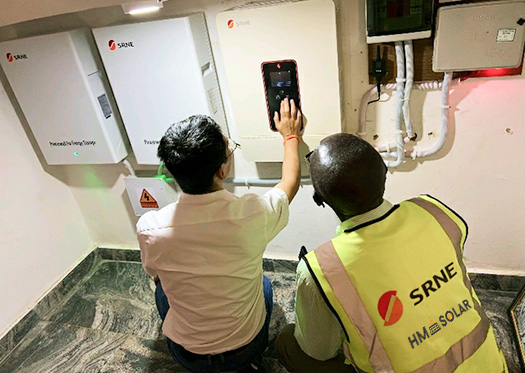
Investing in solar is not simply a matter of buying a few panels, an inverter and a battery.
A properly designed solar system is an energy solution. Its performance depends on how well the system is sized, installed, configured and maintained.
Whether you are a homeowner looking to reduce dependence on generators, a business owner trying to protect your operations from power interruptions, or an installer designing a system for a customer, there are several important things you should understand before investing.
Here are the most important ones.
1. Understand Your Energy Needs First
One of the biggest mistakes people make is buying a solar system based on guesswork.
Before choosing an inverter, battery or solar panels, you need to understand how much electricity you actually use.
Start by listing the appliances and equipment you want the solar system to power. Consider items such as:
- Refrigerators and freezers
- Air conditioners
- TVs and entertainment systems
- Fans
- Lighting
- Water pumps
- Computers and office equipment
- Routers and networking equipment
- Washing machines
- POS and business equipment
You also need to consider how long each appliance runs and which appliances may operate simultaneously.
This information helps determine the appropriate inverter capacity, battery storage and solar panel capacity.
A system designed around your actual energy requirements is more likely to deliver the performance you expect and can prevent you from spending money on equipment you do not need.
When comparing solar quotations, the cheapest option can appear attractive. However, the initial purchase price should not be the only consideration.
Low-quality components can lead to poor performance, reduced reliability, shorter service life and potentially higher maintenance or replacement costs.
Instead of asking only, “How much does this solar system cost?”, ask:
“What value am I getting for my investment?”
Look at the quality of the panels, inverter and battery, system design, installation workmanship, warranty, technical support and expected lifespan.
A good solar investment should provide dependable performance over the long term.
3. Pay Particular Attention to the Battery
For many Nigerian solar users, the battery is one of the most important components because it determines how much stored energy is available when solar production is low or the grid goes off.
Battery technology also matters.
Lithium batteries, particularly lithium-based energy-storage solutions, offer advantages such as long service life, deep discharge capability and lower maintenance requirements compared with traditional battery technologies.
However, don’t simply choose a battery because it is labelled “lithium.”
Consider its:
- Usable capacity
- Voltage
- Maximum charge and discharge current
- Battery management system (BMS)
- Compatibility with your inverter
- Warranty
- Expected cycle life
- Ability to expand the storage system
A properly matched inverter and battery are essential for reliable energy storage. Current SRNE hybrid inverter models, for example, support lithium-battery BMS communication on selected systems.
4. The Inverter Is More Than Just a Power Converter
The inverter is one of the most important components of a modern solar energy system.
It converts electricity from the solar panels and manages how energy flows between the solar array, battery, grid and your connected loads, depending on the system configuration.
This is why choosing an inverter based purely on its advertised capacity is not enough.
Consider:
- Your maximum running load
- Starting or surge loads
- Battery voltage
- Solar panel capacity
- Number of MPPT inputs
- Battery communication
- Protection features
- Expansion capability
- Grid and generator compatibility
- Monitoring and energy-management features
For example, some current SRNE hybrid inverter models support multiple MPPT trackers, 48V storage batteries and parallel operation, providing flexibility for residential and higher-demand applications.
Please select the right inverter as part of the complete system, not as an isolated product.
5. Make Sure the Solar Panels Are Properly Sized
Solar panels are responsible for generating the electricity that powers your loads and charges your battery.
However, installing more panels does not automatically mean you have a better solar system.
The solar array needs to be appropriately matched to the inverter, battery and expected energy consumption.
The installer should consider the available installation area, orientation, shading, solar exposure and the electrical specifications of the selected equipment.
A professional assessment can help determine whether your available roof or mounting area is suitable for the proposed system.
6. Work With a Qualified Solar Installer
Even excellent solar equipment can perform poorly when it is incorrectly installed.
Installation involves more than mounting panels on a roof and connecting cables. Proper system design should consider electrical protection, cable sizing, earthing, battery installation, inverter configuration, panel arrangement and overall system safety.
For installers, this means following appropriate installation practices and understanding the technical requirements of the equipment being deployed.
For homeowners and businesses, it means asking questions about the installer’s experience, previous projects, warranty and after-sales support.
7. Think About Your Backup Requirements
Not every customer needs the same level of backup.
A homeowner may want to keep lights, fans, refrigeration, internet and entertainment running during outages.
A business may need to keep computers, servers, security systems, refrigeration equipment, production equipment or other critical loads operational.
Therefore, ask yourself:
What must remain powered when grid electricity is unavailable?
Separating essential loads from non-essential loads can help create a more practical and cost-effective system.
You may not need to power every appliance in your building simultaneously.
8. Plan for Future Expansion
Your electricity needs today may not be the same in three or five years.
You might add more air conditioners, appliances, office equipment, production machinery or expand your business.
That is why scalability should be considered before purchasing your first system.
Where appropriate, choose equipment and system architecture that can accommodate future expansion.
For example, some SRNE hybrid inverter systems support parallel configurations, allowing appropriately designed systems to scale beyond a single inverter.
Planning for expansion from the beginning can be more economical than replacing an undersized system later.
9. Consider the Total Cost of Ownership
The price you pay for a solar system is only part of the investment.
You should also consider:
Purchase cost + installation + maintenance + replacement + expected lifespan + energy savings.
This gives you a better understanding of the system’s long-term value.
For businesses especially, solar should be considered in relation to operational continuity. Preventing downtime, reducing generator dependence and maintaining critical equipment can have significant financial value beyond the electricity bill itself.
10. Choose a Solar Partner, Not Just a Supplier
Finally, think beyond the equipment.
A solar investment can last for many years, so the company you choose matters.
Look for a solar partner that can help you with:
Assessment → System Design → Product Selection → Installation → Commissioning → Monitoring → Maintenance → Technical Support.
For homeowners and businesses, this creates confidence that someone understands the system beyond the initial sale.
For installers and dealers, working with dependable equipment manufacturers and reliable distribution partners can also make it easier to deliver quality installations to customers.
Ready to Find the Right Solar Solution?
Whether you need solar power for your home, office, business or other application, HM Solar can help you assess your energy requirements and identify a suitable solar solution.
Contact HM Solar today to discuss your energy needs and take the first step towards reliable, cleaner and more dependable power.
2. Don't Choose a Solar System Based on Price Alone
Before You Invest in Solar: Things Every Homeowner, Business Owner and Installer Should Know.
With rising electricity costs, an unreliable grid supply, and the growing need for dependable backup power, solar energy has become an increasingly attractive option for homes and businesses across Nigeria.
Not sure about the
best solution for you?
